When a loved one is struggling, we want to help. But sometimes, we no longer know how.
When someone we love is going through psychological distress, whether visible or silent, we try to be there.
Present, available, strong.
But over time, we get exhausted. We start to doubt. We feel powerless, frustrated, sometimes even angry or guilty.
And then we start to wonder:
How can I be there for my loved one… without completely losing myself?
If you’re reading this, chances are you recognize yourself a bit in this caregiver role.
Who is this article for?
Are you supporting a loved one who is going through psychological suffering, illness, or loss of autonomy?
Are you a parent, partner, adult child, sibling, friend… trying to be present for them?
Do you sometimes feel powerless, exhausted, angry, or guilty about the situation?
Would you like to find a space to talk, to breathe, to understand what you are going through — without judgment?
This article is for you.
Because caregivers also need listening, support, and resources to avoid losing themselves in this demanding role.
In Belgium, many resources can support you
When you’re supporting a loved one in distress, you don’t always know where to find support for yourself.
Here’s an overview of the solutions available in Belgium:
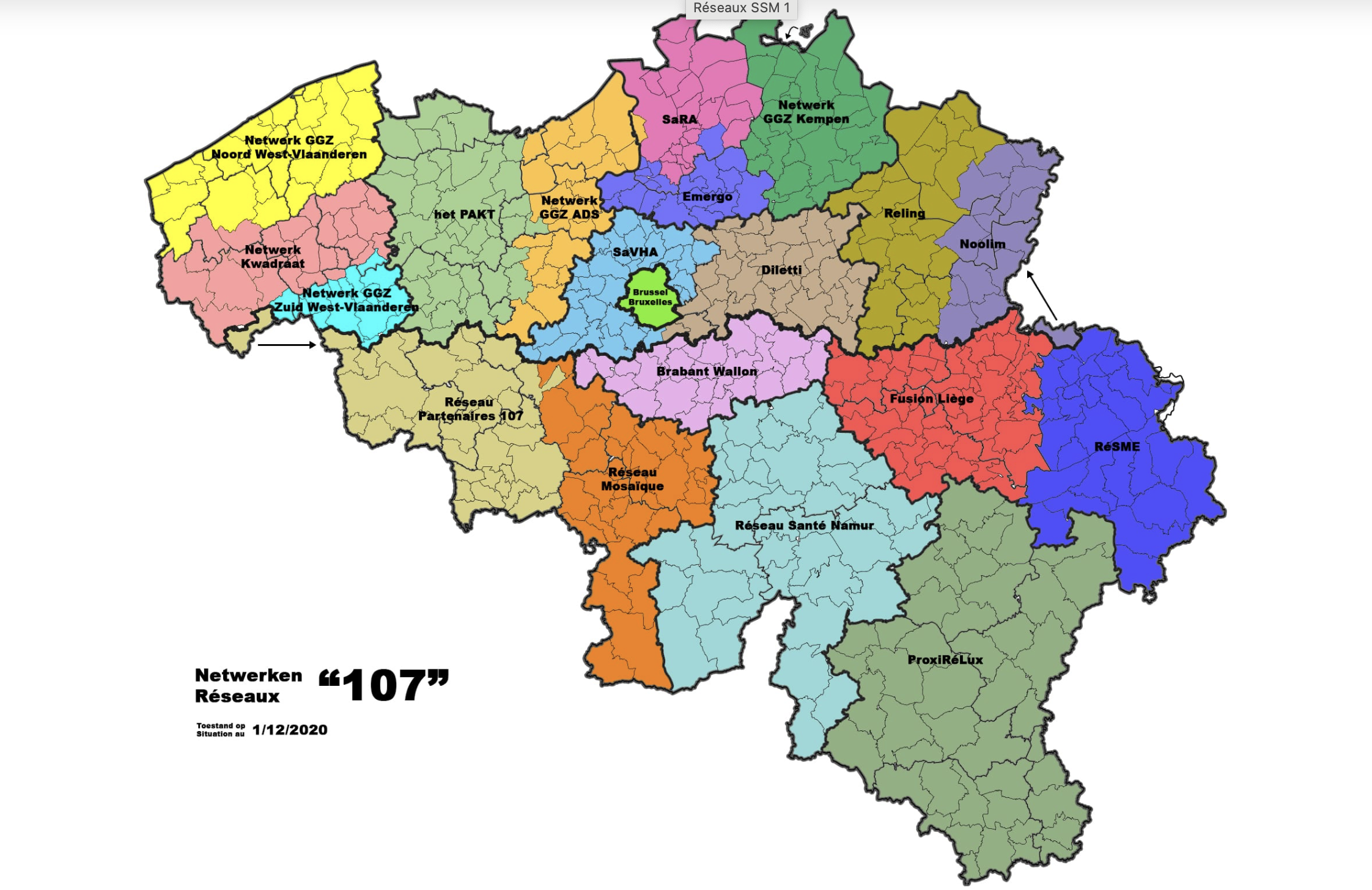
Public mental health networks (“107” networks): they can support both your loved one and you as a caregiver. They offer individual follow-up, peer groups, and occasional support.
Local platforms: they list specialized professionals and groups.
Support groups and group therapy for caregivers: these spaces allow you to share what you are going through, to understand the dynamics at play, and to take care of yourself.
Why join a group as a caregiver?
When supporting a loved one with psychological suffering or loss of autonomy, we carry a lot: emotions, worries, fatigue… often without a space to talk about it.
Joining a support group or group therapy gives you a place to release this burden, feel less alone, and regain the resources to continue helping.
Scientific research confirms the positive impact of these groups for caregivers.
For example, a systematic review by Chien, Wai Tong and Norman, Ian (2009), at the Hong Kong Polytechnic University (International Journal of Nursing Studies), analyzed 19 studies on the effectiveness of group interventions for family caregivers.
The results show that these groups help to:
Reduce stress
Decrease anxiety and depression
Strengthen coping skills
Improve overall well-being
These benefits are seen in both open support groups and more structured groups.
In addition, a meta-analysis by Sörensen, Stephan and Pinquart, Martin (2005), at Humboldt University of Berlin(The Gerontologist), showed that these groups help caregivers to:
Break isolation
Accept their own limits
Develop strategies to preserve their physical and mental health
Even though some studies focus on caregivers of people with severe conditions, the benefits of support groups are also observed in many other caregiving situations.
Support group vs. group therapy: what’s the difference?
A support group for caregivers is a space for open conversation among people who are supporting a loved one.
It’s a place where you can speak freely, without having to “keep up appearances.”
You can share what is heavy, what is frightening, what you dare not say elsewhere.
Group therapy, guided by a professional, allows you to go further:
Better understand the dynamics of the caregiving relationship
Set boundaries
Learn to take care of yourself without guilt
Because you cannot help for long if you end up collapsing yourself.
But what exactly is a “network”?
A mental health network is not one single building.
It is a group of professionals and services working together in your region to support people in psychological distress — and their loved ones.
In a network, you may find:
Psychologists
Social workers
Nurses
Facilitators of peer groups
And sometimes partners in local associations, schools, or community health centers
You can contact a network even if you don’t yet know what to ask.
They are there to listen, advise, and guide you.
Which networks to turn to when supporting a loved one?
For example, PsyBru is a mental health network based in Brussels. It connects people with local professionals and services that provide psychological support, therapy programs, crisis care, and peer groups.
💡 If you click on a name that interests you, you’ll be redirected to their website.
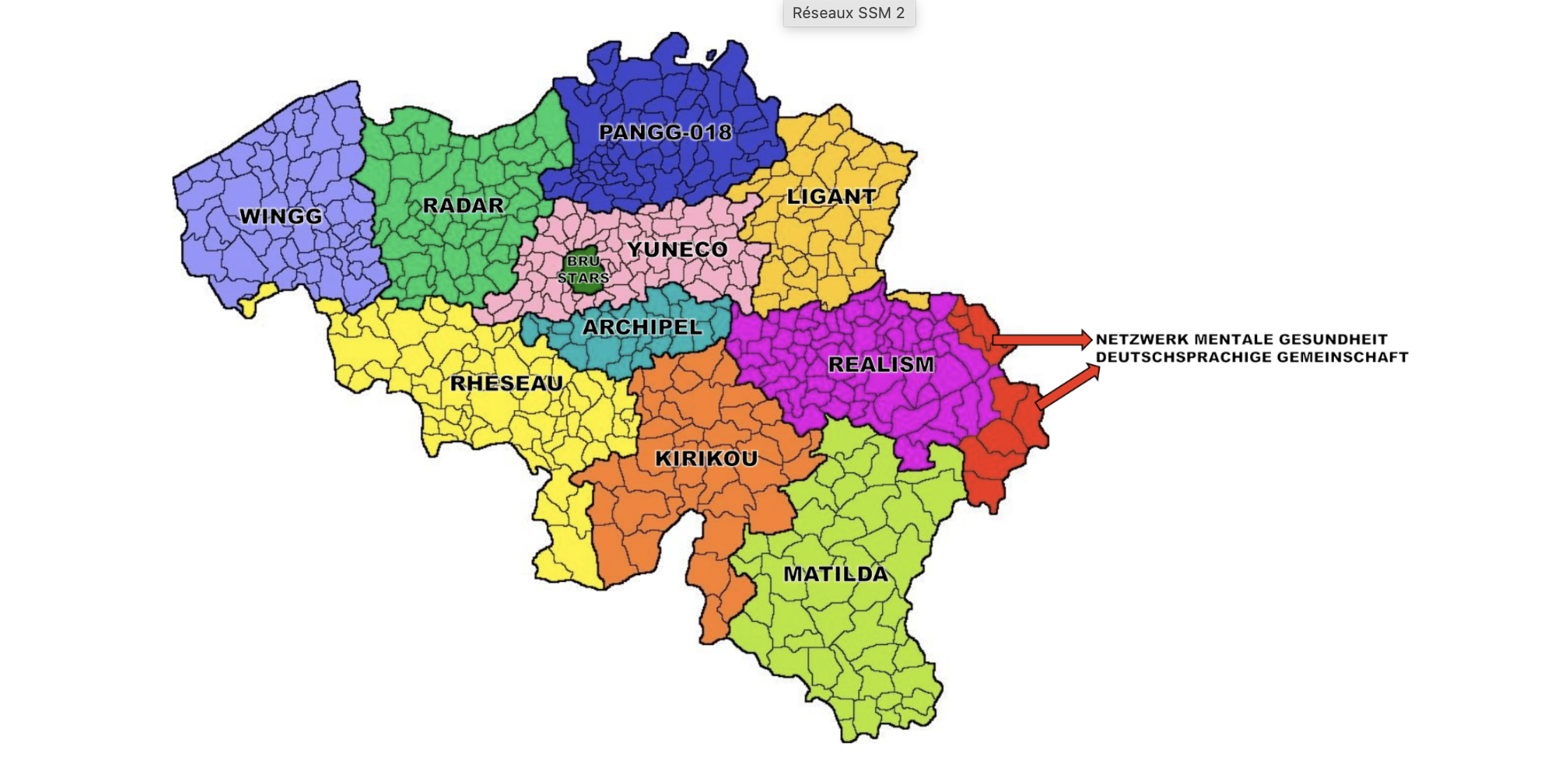
📍 Maps to guide you
Here are maps of mental health networks in Belgium (for adults and for children/teens).
The maps shared here come from the reference site psy107.be, which centralizes official information on mental health networks in French-speaking Belgium.
Other platforms to explore
In addition to the 107 networks, there are other complementary platforms that can help you find spaces for support and open dialogue.
In addition, you can also explore Kalima, a platform dedicated to circles of speech, available online or in-person.
Kalima offers:
Thematic circles focused on emotional expression, parenting, and personal experiences,
Open collective spaces for everyone,
Workshops on active listening and mindful communication.
It is a complementary resource that allows you to explore supportive spaces in a preventive and caring approach.
Kalima circles are suitable for anyone seeking connection, sharing, or looking to complement a therapeutic journey.
How to take the first steps?
If you feel the need to find a space for dialogue or support, here are a few ways to get started gently:
If you’d like to begin with an open and supportive space, where you can share your feelings without pressure, you can explore the circles of speech offered by Kalima.
If you need a more structured or therapeutic space, the Brussels Platform for Mental Health (PBSM) will help you identify support groups, group therapies, and workshops tailored to your needs.
If you’re looking for services or professionals closer to home, the 107 networks map can help you locate the resources available in your region.
Conclusion
You cannot do everything. And you don’t have to do it alone.
Taking care of yourself is not a luxury — it is a condition for being able to continue helping.
Research shows: sharing in a group, feeling understood, setting boundaries — these are essential levers for maintaining your own balance when supporting a loved one.
If you feel the need for support, you can explore the available support groups and group therapy for caregivers — some are offered through the 107 networks, others through associations or local platforms.
You will find a space to release what you are carrying, to breathe, to regain your strength.
You can also contact the network in your region directly — via the maps above — and they will guide you to the most appropriate groups or resources for your situation and needs.
One step, even a small one, can change everything.
You, too, deserve to be supported.
💛 “Taking care of yourself is not selfish. It gives you the strength to keep taking care of others — with heart, without burning out.” 💛
Apolline, for Healing Together
References:
Chien, W.T. & Norman, I. (2009). The effectiveness and active ingredients of mutual support groups for family caregivers of people with psychotic disorders: A literature review.International Journal of Nursing Studies, 46(12), 1604–1623. Link
Pinquart, M., & Sörensen, S. (2006). How effective are interventions with caregivers? An updated meta-analysis.The Gerontologist, 46(5), 590–602. Link
This article was created by our former collaborator, Rawya Benaissa. When screens take over We all sometimes get carried away by certain habits. With screens, it’s even easier. For young children, teens, and young adults, the phone has become a…
Who is this article for? This article is for you if you feel a bit lost, overwhelmed, or simply tired of something that keeps looping in your head. If you don’t really have the energy or desire to start a…
Every science is constantly evolving — and psychology is no exception. Almost every day, a new discovery emerges. But where do we stand with psychology today? Currently, many new fields are appearing in psychology, especially with the arrival of high-performance…